


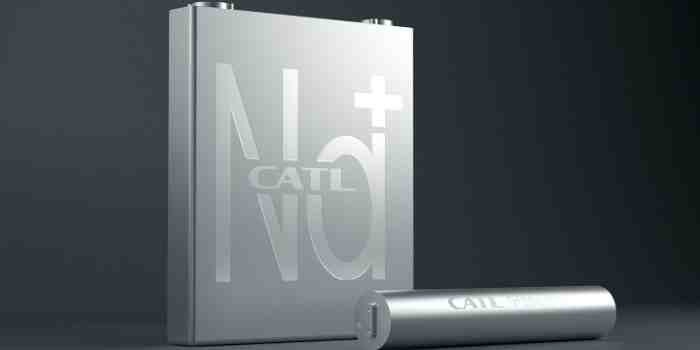
Newswise – Seeing is believing – or rather, seeing can help understanding, especially when it comes to the mechanisms underlying lithium-ion batteries. Despite its near-ubiquitous use in cell phones, computers, and more, the complex electrochemical environments of lithium-ion batteries remain unclear. To better understand and improve battery performance, researchers examined the current scientific literature and used electron microscopy to take a closer look at the charge transfer and lithium-ion migration mechanisms that produce power.
This study was publicly available online on September 6 in Nano Research Energy.
“Commercial lithium-ion batteries are widely used as energy storage devices, including electric vehicles, wearable electronics and grid energy storage,” said Yi Ding, a professor at Tianjin University of Technology. “Energy, power, charge-discharge rate, cost, cycle life, safety and environmental impact must be considered when selecting lithium-ion batteries for a suitable application, but each specific application faces a number of different challenges.”
The amount of energy stored is important for portable electronics, while cost and safety are more important for, for example, electric vehicles. Costs and safety are also important for the energy grid’s needs, but the energy density will be lower than for electric cars. The trade-off between these elements shifts based on need, but the ability to adjust performance is limited by incomplete understanding of the materials used in batteries.
“The active electrode materials are the main part responsible for the cell chemistry and performance and ultimately affect the commercialization of the engineered battery,” said Ding. “The performances, such as cycle life and energy density, of existing commercial electrode material systems still need to be improved, so it is important to understand the intrinsic physical and chemical properties, such as structural evolution/kinetics during lithium de-embedding and effect of electrode-electrolyte interface on performance for lithium-ion batteries.”
The researchers reviewed recent advances in electron microscopy to see how traditional characterization techniques measure up in understanding the structure-activity relationship of commercial lithium-ion batteries.
“By comparing with the characterization content obtained by traditional characterization techniques, such as X-ray diffraction and X-ray photoelectron spectroscopy, we illustrate the advantages and limitations of conventional electron microscopes and recently developed advanced electron microscopic characterization techniques, such as in situ electron microscopy technology, in this critical research,” said Ding.
The researchers investigated how advanced electron microscopy and associated characterization techniques can provide different insights into how, for example, lithium ions migrate in the battery to produce charge or how charge transfer can trigger energy use. They specifically focused on transition metal dissolution and charge transfer mechanism in the charging and discharging process of lithium ion battery positive electrodes; the structure and evolution of cathode-electrode interface and solid electrolyte interphase during long-term cycling; and the effect of electrode structure and interface on lithium-ion migration.
The bottom line, according to Ding, is that next-generation lithium-ion battery technologies with better cost and performance advantages are needed.
“We suggest the possibility of combining electron microscopy with other techniques to obtain more comprehensive information,” Ding said, noting that electron microscopy has three common limitations in battery assessment. These include inconsistent electrochemical environments between electron microscopy fields and actual batteries; unstable time windows that can skew data related to the evolution of the sample; and some batteries cannot be assessed quantitatively on the nanoscale. “Even with limitations, these discussions allow researchers to gain a deeper understanding of how commercial lithium-ion batteries work at the microscale and provide guidance for design strategies for practical, high-performance batteries.”
Other contributors include Chao Li, Bowen Liu and co-corresponding author Ningyi Jiang, Tianjin Key Laboratory of Advanced Functional Porous Materials, Institute for New Energy Materials and Low-Carbon Technology, School of Materials Science and Engineering, Tianjin University of Technology. Jiang is also affiliated with Tianjin University’s School of Chemical Engineering and Technology.
The National Key Research and Development Program of China, the National Natural Science Foundation of China, and the National Science Fund for Distinguished Young Scholars funded this work.
Nano Research Energy is launched by Tsinghua University Press, with the aim of being an international, open and interdisciplinary journal. We will publish research on cutting-edge advanced nanomaterials and nanotechnology for energy. It is dedicated to explore various aspects of energy-related research using nanomaterials and nanotechnology, including but not limited to energy generation, conversion, storage, conservation, clean energy, etc. Nano Research Energy will publish four types of manuscripts, that is, Communication, Research Papers, reviews and perspectives in an open access format.
SciOpen is a professional open access resource for the discovery of scientific and technical content published by Tsinghua University Press and its publishing partners, providing the scientific publishing community with innovative technology and market-leading capabilities. SciOpen offers end-to-end services across manuscript submission, peer review, content hosting, analytics and identity management and expert advice to ensure the development of each journal by offering a range of options across all functions such as journal layout, production services, editorial services, Marketing and campaigns, web functionality, etc. By digitizing the publishing process, SciOpen extends its reach, deepens its impact and accelerates the exchange of ideas.
Contents
Do lithium-ion batteries have toxic chemicals?
Lithium batteries contain potentially toxic materials, including metals, such as copper, nickel and lead, and organic chemicals, such as toxic and flammable electrolytes containing LiClO4, LiBF4 and LiPF6.
Are lithium batteries carcinogenic? Some possible lithium-ion battery materials are toxic, carcinogenic, or may undergo chemical reactions that produce dangerous heat or gases. Toxic materials include lithium compounds, nickel compounds, arsenic compounds, and dimethoxyethane.
How toxic are lithium batteries?
The research, published in Nano Energy, identified more than 100 toxic gases released by lithium-ion (Li-ion) batteries, including carbon monoxide. The gases are potentially fatal, they can cause severe irritation to the skin, eyes and nasal passages, and harm the wider environment.
Is lithium batteries toxic to humans?
⺠Exposure to lithium can cause loss of appetite, nausea, vomiting, diarrhea and abdominal pain. ⺠Lithium can cause headaches, muscle weakness, twitching, blurred vision, loss of coordination, tremors, confusion, seizures and coma.
Do lithium batteries emit toxic fumes?
Li-ion batteries release a number of toxic substances14â16 as well as e.g. CO (a suffocating gas) and CO2 (induces anoxia) during heating and fire.
Do lithium batteries pollute?
Lithium-ion batteries contain metals such as cobalt, nickel and manganese, which are toxic and can contaminate water supplies and ecosystems if they leak from landfills. In addition, fires at landfills or battery recycling facilities have been attributed to improper disposal of lithium-ion batteries.
Is lithium battery toxic to humans?
⺠Exposure to lithium can cause loss of appetite, nausea, vomiting, diarrhea and abdominal pain. ⺠Lithium can cause headaches, muscle weakness, twitching, blurred vision, loss of coordination, tremors, confusion, seizures and coma.
Are old lithium batteries toxic?
Once you’ve discovered that your battery is damaged, it’s important to fight your instincts to throw it away. Throwing lithium batteries in the trash can leak toxic chemicals and even become a fire hazard.
Is it safe to touch lithium-ion battery?
It is corrosive to skin and other metals, and toxic if consumed in large enough quantities, releasing toxic fumes if burned. Most incidents occur when the battery’s shell is damaged and the lithium is exposed to air/moisture.
Can you get lithium poisoning from battery?
Toxicity from leakage of battery contents has not been widely reported. We present the first case of accidental lithium poisoning secondary to button battery impaction in the cervical oesophagus. Lithium poisoning should be considered in all children with neurological symptoms after ingestion of lithium ion batteries.
Which battery most toxic?
Lithium batteries are everywhere, and they’re more dangerous than you think. Here’s what you should know. Lithium batteries have caused a number of fires and explosions in consumer products and at recycling facilities in the United States.
What is toxic battery?
Although throwing away batteries may seem harmless, it can have serious effects on the environment. Every battery contains dangerous, toxic and corrosive materials such as mercury, cadmium, lithium and lead.
Are all batteries toxic?
Common battery types such as lithium-ion, lead-acid or nickel-cadmium contain a number of heavy metals. Although not all batteries are equally toxic, certain materials in them can pose health, safety and environmental concerns, especially if they are not disposed of properly and open and leak into the soil.
Can you put out a lithium battery fire with sand?
If you are dealing with a lithium ion battery, the best thing to do is to use dry sand or table salt to extinguish any fires that may occur. Lithium-ion batteries are notorious for causing fires, so it’s always better to be safe than sorry.
Will baking soda put out a lithium battery fire? LI-ion fires are violent, and the gases are disgusting. If there is a fire, unplug the unit (if plugged in), call the fire department, then use an ABC or BC rated fire extinguisher (info) to suppress the fire. In a pinch, use sand, clay cat litter, baking soda, or (last resort) water.
How do you extinguish a lithium battery fire?
Small lithium-ion batteries can be drained with water because they contain little lithium metal. Lithium metal battery fires can be extinguished with a Class D fire extinguisher. Larger battery fires are best handled with a foam extinguisher, CO2, ABC dry chemicals, powdered graphite, copper powder or sodium carbonate.
Which extinguisher should you use for a lithium fire?
Lithium metal battery fires can be extinguished with a Class D fire extinguisher. Larger battery fires are best handled with a foam extinguisher, CO2, ABC dry chemicals, powdered graphite, copper powder or sodium carbonate.
Why can’t you put out a lithium battery fire?
Extinguishing the fire This is because the lithium salts in the battery are self-oxidizing, which means they cannot be “starved out” like a traditional fire. So how do you post it? Because the lithium has an ignition point of 500°C, the battery must be cooled to a sub-ignition temperature.
What happens when lithium batteries catch fire?
If left unchecked, it can result in a chain reaction of cell failures, causing the battery to heat up even more and spiral out of control. External factors such as keeping the battery very close to a heat source or near a fire can cause it to explode.
What happens if you put water on a lithium battery fire?
Therefore, we should avoid trying to extinguish lithium battery fires with water. The primary cause is lithium combustion in the air we breathe. And also reacts with water and forms explosive hydrogen which can develop a chain reaction.
Can you use water on a battery fire?
Battery University offers these guidelines for dealing with lithium battery fires: Small lithium ion batteries can be drained with water because they contain little lithium metal. Lithium metal battery fires can be extinguished with a Class D fire extinguisher.
Can you put out a lithium battery fire with water?
Traditional fire extinguishers, such as foam and water, do not work on lithium battery fires. The only way to extinguish a lithium battery fire is to flood the battery with water.
What happens if you put water on a lithium battery?
Lithium reacts intensely with water to form lithium hydroxide and highly flammable hydrogen. The colorless solution is highly alkaline. The exothermic reactions last longer than the reaction of sodium and water, which is just below lithium on the periodic table.
Why are lithium fires hard to put out?
Extinguishing the fire As firefighters have discovered in recent years, lithium-ion battery fires are prone to reoccurrence. That’s because the lithium salts in the battery are self-oxidizing, meaning they can’t be “starved out” like a traditional fire.
Can you put out a lithium battery fire?
Traditional fire extinguishers, such as foam and water, do not work on lithium battery fires. The only way to extinguish a lithium battery fire is to flood the battery with water. A lithium fire blanket will safely insulate a lithium fire battery for hours, until it can be flooded and extinguished.
Is lithium easily flammable?
Lithium reacts violently with MOISTURE, WATER or STEAM to produce heat and flammable and explosive hydrogen gas and toxic lithium hydroxide.
What country has the most lithium 2022?
25 May 2022 The largest lithium reserves are found in Latin America and Australia. Of the top ten countries with the largest concentration of lithium reserves, Chile tops the list, with 9.2 million metric tons (obtained from brine.)
What year will we run out of lithium? The IEA says the world could face lithium shortages by 2025. And Credit Suisse says demand for lithium could triple between 2020 and 2025, meaning “supply would be stretched.” Campaign group Transport and Environment says there is only enough lithium to produce up to 14 million electric cars by 2023, reports Reuters.
Where does the US get most of their lithium?
Although lithium reserves are spread across the globe, the United States is home to only one active lithium mine, in Nevada.
Is there enough lithium to power the world?
“It is going to be a real crunch to get hold of the material. We don’t have enough in the world to turn around that much [lithium] production in the world by 2035.”
How long will earths lithium last?
What is the long-term outlook for lithium demand? The raw material remains important in the long term, says, for example, Nobel laureate M. Stanley Wittingham, who once laid the scientific basis for the batteries used today. “It will be lithium for the next 10 to 20 years,” says Wittingham.
Is there an oversupply of lithium?
Bank of America Estimates Lithium Oversupply in 2023; the deficit will resume in 2027.
How much lithium ore does it take to make a car battery?
A typical electric car battery has: 25 pounds of lithium 60 pounds of nickel 44 pounds of manganese 30 pounds of cobalt 200 pounds of copper 400 pounds of aluminum, steel and plastic The first 4 ingredients are from limited sources and will continue to increase in price.
Does China have the most lithium?
China dominates the global supply chain for lithium-ion batteries. Now rival countries are fighting for more control over “white oil”.
Which country has highest lithium?
With 8 million tonnes, Chile has the world’s largest known lithium reserves. This puts the South American country ahead of Australia (2.7 million tonnes), Argentina (2 million tonnes) and China (1 million tonnes). Within Europe, Portugal has smaller quantities of the valuable raw material.
Does China own most of the lithium?
China dominates in material processing and battery production. “It refines 60% of the world’s lithium, controls 77% of global battery cell capacity and 60% of the world’s production of battery components,’ Gavekal’s researchers wrote. “Of 200 battery megafactories in the pipeline by 2030, 148 are in China.â€
Can lithium batteries leak acid?
So, do lithium batteries leak acid? Generally speaking, no. Lithium batteries contain several components, but acid is not on that list. In fact, they mainly contain lithium, electrolytes, cathodes and anodes.
.

Comments are closed.