


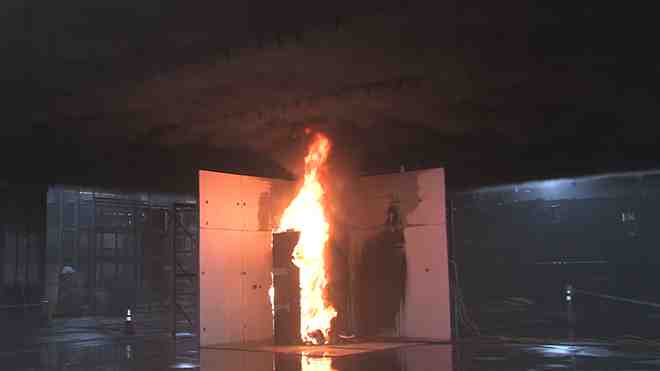
When it comes to mobility, the future is electric, and that means lots of battery. Unfortunately, the battery has the potential to catch fire or explode, causing a fast and violent fire. But we may have a solution – or several solutions.
This article is Part Three, the end of a series I wrote about lithium-ion battery fires in scooters and ebikes. Part One explores battery fire incidents, while Part Two looks at cause and effect. Today I focus on prevention. Let’s enter:
Contents
Prevent the fire from occurring
What if we could prevent fires from occurring in the first degree?
Hi there, EV nerd!
Subscribe now for weekly recaps of our favorite mobility stories
Thermarestor devices offer preventive maintenance. The device monitors the detection point and detects heat.
If it detects abnormal heat (over 80°C), it isolates the power and eliminates the ignition source.
It can be plugged into new and existing consumer electronics and is easy to install.
Verdict: Can a product like Thermarestor be available for retrofit? I can see it resonating, especially with ebike owners who have hacked their ebikes. Linking observability to the app will also help.
Internal extinguishing
What if there was a way to extinguish lithium-ion battery fires at the point where they occurred? Meet the e-bulb, marketed as “the world’s smallest fire extinguisher.”
Specifically, an electronic bulb is a thermally activated glass bulb that contains a circuit breaker. The bulb has a non-toxic and non-conductive extinguishing fluid. The thermal bulb explodes once it reaches a dangerous temperature, and the liquid turns into a gas. In seconds the fire goes out
The e-bulb also cuts off electricity in the event of a fire while the device is plugged in. This means that the electric fire cannot be rekindled.
The company is currently in discussions with car manufacturers to implement their solutions on batteries.
Verdict: What’s not to love about a product that extinguishes a small fire at the source? However, unlike Thermarestor, electronic bulbs are more responsive than preventive.
Safer batteries
ZapBatt battery activation considers future safe batteries made of lithium titanate.
Lithium titanate is a titanium nanocrystal which, under thermal ground conditions, changes from a conductor to a resistor, containing what is effectively an innate form of self-preservation.
According to Charlie Welch, CEO & Co-Founder ZapBatt, unlike lithium-ion:
You can do almost anything to it [lithium titanate battery], short circuit, overvoltage, puncture, and it won’t cause thermal runaway.
I have seen cells tortured, and I have never seen a single fire on them.
Historically lithium titanate has not received as much attention as lithium-ion due to its lower energy density.
Lithium-titanate as a viable alternative to lithium-ion is developing in places like Taiwan, where it is currently used in EV and ebus development.
The downside is that lithium-titanate batteries cost twice as much as lithium-ion batteries. However, ZapBatt plans to launch a micromobility battery next year which is not only much safer but can also be fully recharged in 20 minutes and last for 20 years.
Verdict: This will no doubt be a game-changer for the industry, especially for vendors willing to incur additional costs or owners looking for faster fees.
Bikes for heavy riding
In New York, ebikes are used extensively by delivery riders guilty of buying cheap bikes, riding them beyond their intended use, and charging their batteries unsafely, increasing the risk of fire.
But there is one company that sells and rents ebikes specifically for Zoomo delivery riders. I spoke with Joey Skavroneck, Director of the US company. He told me that the world’s largest and most innovative delivery brands use Zoomo ebikes, including UberEats, Deliveroo, Doordash, Just Eat Takeaway, Domino’s, Pizza Hut, Gorilla, Getir, Milkrun, Zapp, and many more.
Among its laudable features, the Zoomo’s long battery life (up to 8 hours) and fast charging (4 hours), so riders can complete long shifts without worrying about running out of battery (or relying on unsafe charging scenarios). All riders get access to Zoomo’s comprehensive service and maintenance plan.
The company told me they have collaborated with individual partners on educating vehicles and batteries which are unsafe, safe storage, and progressive solutions to meet shipping needs.
Zoomo believes there is a need to incentivize couriers to buy or rent bikes that are safer and more legal “so that couriers can continue to make a living without endangering their homes.”
Find bad batteries
An important part of battery safety is identifying problems during the R&D phase. A startup called Voltaiq has built the mobility industry’s first Enterprise Battery Intelligence (EBI) software platform, helping it avoid costly recalls and catastrophic battery fires.
I spoke to Voltaiq CEO Tal Sholklapper to find out about their platform, which fetches data from silos, automatically gathering all battery data from test labs, production lines, and systems operating in the field. It converts this data to a standard format, and organizes and stores it in a secure centralized location that is accessible to users.
Verdict: important. You can’t solve a problem unless you really understand it. Voltaiq is currently working with several car OEMs, and the technology will benefit micromobility companies that choose to develop their own batteries.
Embed battery safety into your MVP
I want to understand how micromobility manufacturers approach the problem of battery fires. I spoke with Oscar Morgan, CEO at scooter company Bo, a company that aims to create “the safest scooter in the world.”
One of the priorities is cell traceability. The company uses high quality battery cells that have a high traceability rate:
This means if the problem occurs in a certain batch [eg. 1 million cells] You can trace it to that pool, and check the occurrence rate against the expected failure rate per million cells.
So, if the incident rate is beyond reasonable expectations, the product that uses the battery can be notified, and recalled.
Traceability is especially absent on cheap ebikes and scooters, most of which use unbranded and untraceable cells – maybe even from some suppliers.
As Morgan notes, “The incidence rate within a given assemblage is nearly impossible to identify, which makes it bullshit about whether a particular pool of cells is safe.”
Also in Bo’s advantage is the use of a high quality BMS which contains multiple thermocouple sensors that monitor cell temperature, has charge circuit control, and isolates the battery module when an ‘out-of-parameter’ condition is detected.
Morgan asserts that the shortest route to eliminating the risk of battery fires is to “house all batteries in a ventilated stainless steel casing, which has a melting point higher than the burning temperature of lithium. However, for weight, design and cost considerations, this is not always practical.”
Verdict: Very positive that Bo thinks critically about battery safety. I’d like to see a partnership with some prevention technology like Thermarestor.
General safety tips for ebike and escooter owners
Planning to buy an ebike or scooter and now imagine your house on fire? Here are some well-established tips for safety:
Preventing and responding to battery fire risks is a complex and multifaceted affair. Embedding security into new builds is doable but dealing with retrofits is a much more difficult scenario. Especially if you consider the number of ebikes and scooters that are already operating.
But it needs to be a priority, especially as existing battery use decreases, increasing the risk of fire.
How hazardous are lithium batteries?
Lithium batteries pose a fire hazard, even when they are no longer useful in consumer equipment/products. A damaged, deformed, or recalled battery has a greater potential than an undamaged lithium battery to short circuit, release heat, or even cause a fire.
Are lithium batteries carcinogenic? Some possible lithium ion battery materials are toxic, carcinogenic, or may undergo chemical reactions that generate heat or harmful gases. Toxic substances include lithium compounds, nickel compounds, arsenic compounds, and dimethoxyethane.
Is lithium battery hazardous?
Lithium batteries are generally safe and unlikely to be damaged, but only as long as there are no defects and the battery is not damaged. When lithium batteries fail to operate safely or are damaged, they can present a fire and/or explosion hazard.
Is a leaking lithium battery dangerous?
Leaking battery: AVOID exposure to leaking electrolyte, as it can cause severe irritation and/or damage to skin, mucous membranes, or eyes.
Are lithium batteries dangerous to store?
Conclusion. Lithium batteries, in general, are a safe and reliable source of portable energy. The number of incidents involving lithium batteries is relatively small, and the general likelihood of injury by lithium batteries is also low.
Is it common for lithium batteries to explode?
Fortunately, large explosions caused by Li-ion batteries are rare. However, if they were exposed to the wrong conditions, there was less chance of them burning or exploding.
How likely is a lithium battery to explode?
But in reality, lithium battery fires are rare. According to technology reporting site CNET, your chance of a lithium battery fire is about 1 in 10 million.
What causes a lithium battery to explode?
Most lithium-ion battery fires and explosions are caused by short circuit problems. This occurs when the plastic separator fails and allows the anode and cathode to come into contact. And once the two come together, the battery starts to overheat.
How do you keep lithium batteries from exploding?
How to Prevent Lithium Battery Fires (10 Tips)
- Only buy batteries from reputable manufacturers.
- Do not charge non-rechargeable batteries.
- Keep the battery away from high temperatures.
- Do not store the battery in the charger after the charging cycle is complete.
Why are lithium batteries hazardous?
Primary lithium batteries contain hazardous materials such as lithium metal and flammable solvents, which can cause exothermic activity and uncontrollable reactions above the specified temperature. Lithium-ion batteries operating outside of the safe envelope can also cause lithium metal formation and thermal runaway.
Why are lithium batteries considered dangerous?
They can overheat and ignite under certain conditions, such as a short circuit, physical damage, improper design, or assembly. Once ignited, lithium cell and battery fires can be difficult to extinguish.
Why is lithium hazardous?
Finely divided particles, powders or Lithium dust may ignite Spontaneously in the AIR. Lithium reacts violently with HUMIDITY, WATER or Steam to produce heat and the flammable and explosive gases of Hydrogen and Lithium Hydroxide are toxic.
Is lithium dangerous to humans?
At 10 mg/L of blood, a person has mild lithium poisoning. At 15 mg/L they have confusion and speech impairment, and at 20 mg/L Li there is a risk of death. The recommended daily intake of 14.3 microg/kg body weight of lithium for adults has been suggested.
Can lithium batteries self ignite?
Butler: Lithium batteries are capable of spontaneous ignition and subsequent explosions from overheating. It may be caused by electrical short circuit, rapid discharge, overcharging, manufacturing defect, poor design or mechanical damage, among many other causes.
What causes a lithium battery to light up? Why Do Lithium Batteries Burn? Most fires that occur from lithium batteries are caused by thermal runaway. Thermal runaway occurs when conditions are met that cause a reaction to occur and cannot be easily stopped.
Can lithium-ion batteries explode when not in use?
Leaving your phone in the sun for too long will not cause a battery explosion or fire. However, if the lithium battery is exposed to very high temperatures for a long time, an explosion may occur.
Can an unused battery explode?
Risk. There are always risks associated with any battery. Old batteries can explode, leak, release harmful gases or, as we have seen, catch fire.
Can lithium batteries randomly explode?
Fortunately, large explosions caused by Li-ion batteries are rare. However, if they were exposed to the wrong conditions, there was less chance of them burning or exploding.
How likely is a lithium battery to explode?
But in reality, lithium battery fires are rare. According to technology reporting site CNET, your chance of a lithium battery fire is about 1 in 10 million.
Does lithium ignite?
What’s the danger? Spontaneous fire and release of toxic gases. Lithium ion batteries are dense with energy and contain flammable electrolytes and fumes. If damaged or overheated, they can spontaneously ignite and start giving off flammable gases that can ignite nearby batteries.
Is lithium fire resistant?
But Lithium is also a highly reactive alkali metal, and if battery cells overheat or short circuit, thermal runaway can occur. This results in a sudden release of energy, and a very strong flame or explosion that can ignite other batteries in the vicinity, causing heavy losses.
Why does lithium start on fire?
Most fires that occur from lithium batteries are caused by thermal runaway. Thermal runaway occurs when conditions are met that cause a reaction to occur and cannot be easily stopped. These reactions are exothermic, meaning they give off heat, and that heat may be enough to cause a fire.
Does lithium ignite in air?
Finely divided particles, powders or Lithium dust may ignite Spontaneously in the AIR. Lithium reacts violently with HUMIDITY, WATER or Steam to produce heat and the flammable and explosive gases of Hydrogen and Lithium Hydroxide are toxic.
Do lithium batteries still catch fire?
From a non-technical point of view, lithium-ion batteries burn out because they are very sensitive to high temperatures, even more quickly than ordinary batteries due to heat. They are highly flammable on the inside.
Do lithium batteries pose fire risk?
Lithium batteries are generally safe and unlikely to be damaged, but only as long as there are no defects and the battery is not damaged. When lithium batteries fail to operate safely or are damaged, they can present a fire and/or explosion hazard.
Do lithium batteries explode in fire?
Can Lithium Batteries Explode? Lithium batteries are the most common rechargeable batteries today and power many devices and equipment, such as cell phones, laptops, and even electric cars. While generally safe, lithium batteries can explode or catch fire, causing serious injury.
Why do some lithium batteries catch fire?
Technically, lithium-ion batteries catch fire due to anomalies in their constituent elements – an electrolyte consisting of an organic solvent, an oxygen-rich cathode, a flammable gas. To minimize risk, store the EV in a shade, store in a dry place, and let it cool before charging again.
How common are lithium-ion battery fires?
City data showed a 233% increase from the same period last year, which saw 18 fires between January 1 and May 3, 2021. There have been 66 injuries and five deaths in fires involving lithium-ion batteries this year, the FDNY said.
How often do lithium-ion batteries burn out? But in reality, lithium battery fires are rare. According to technology reporting site CNET, your chance of a lithium battery fire is about 1 in 10 million.
What causes a lithium battery to catch fire?
Technically, lithium-ion batteries catch fire due to anomalies in their constituent elements – an electrolyte consisting of an organic solvent, an oxygen-rich cathode, a flammable gas. To minimize risk, store the EV in a shade, store in a dry place, and let it cool before charging again.
What do you do when a lithium battery catches on fire?
Small lithium-ion batteries can be doused with water because they contain a small amount of lithium metal. Lithium-metal battery fires can be extinguished with a Class D fire extinguisher. Larger battery fires are best treated with foam extinguishers, CO2, dry chemical ABC, powdered graphite, copper powder or sodium carbonate.
Can overcharging a lithium battery cause a fire?
When overcharged, lithium ion batteries can overheat, explode, and cause a fire. Even a slight overcharging will reduce the discharging capacity of the cell, leading to overdischarging, which increases impedance and heat generation, and reduces the life of the cell.
Do lithium batteries pose a major fire hazard?
Lithium batteries are generally safe and unlikely to be damaged, but only as long as there are no defects and the battery is not damaged. When lithium batteries fail to operate safely or are damaged, they can present a fire and/or explosion hazard.
Are lithium batteries a fire hazard?
However, lithium-ion batteries are very sensitive to high temperatures and are flammable. These battery packs tend to break down more quickly than usual, due to heat. If a lithium-ion battery fails, it will catch fire and cause widespread damage.
How likely are lithium-ion batteries to explode?
“Lithium-ion batteries have a failure rate of less than one in a million.” By comparison, the National Oceanic and Atmospheric Administration says your chance of being struck by lightning in your lifetime is about 1 in 13,000. Of course, even one fire or explosion is too much. many.
How do you prevent lithium batteries from catching on fire?
How to Prevent Lithium Battery Fires (10 Tips)
- Only buy batteries from reputable manufacturers.
- Do not charge non-rechargeable batteries.
- Keep the battery away from high temperatures.
- Do not store the battery in the charger after the charging cycle is complete.
Do lithium-ion batteries catch fire easily?
However, lithium-ion batteries are very sensitive to high temperatures and are flammable. These battery packs tend to break down more quickly than usual, due to heat. If a lithium-ion battery fails, it will catch fire and cause widespread damage.
How does a lithium-ion battery start a fire?
Most fires that occur from lithium batteries are caused by thermal runaway. Thermal runaway occurs when conditions are met that cause a reaction to occur and cannot be easily stopped. These reactions are exothermic, meaning they give off heat, and that heat may be enough to cause a fire.
How likely are lithium-ion batteries to explode?
“Lithium-ion batteries have a failure rate of less than one in a million.” By comparison, the National Oceanic and Atmospheric Administration says your chance of being struck by lightning in your lifetime is about 1 in 13,000. Of course, even one fire or explosion is too much. many.
What to do if a lithium battery starts smoking?
Unplug it from the wall outlet when it is charging. Avoid breathing fumes or fumes of any kind. If possible, move to an outdoor area away from flammable materials and away from windows or doors.
What happens if you inhale lithium battery fumes? and/or shortness of breath. Higher exposures can cause a buildup of fluid in the lungs (pulmonary oedema), a medical emergency, with severe shortness of breath. Exposure to Lithium can cause loss of appetite, nausea, vomiting, diarrhea and abdominal pain.
How toxic is lithium battery smoke?
The study, published in Nano Energy, identified more than 100 toxic gases emitted by lithium-ion (Li-ion) batteries, including carbon monoxide. These gases are potentially fatal, they can cause strong irritation to the skin, eyes and nasal passages, and harm the wider environment.
What do you do if you smoke a lithium battery?
Unplug it from the wall outlet when it is charging. Avoid breathing fumes or fumes of any kind. If possible, move to an outdoor area away from flammable materials and away from windows or doors. Small devices can be dropped into a bucket of clean water to cool if this can be done safely.
How toxic is battery smoke?
Burning batteries emit toxic fumes, which irritate the lungs. Leaking battery: AVOID exposure to leaking electrolyte, as it can cause severe irritation and/or damage to skin, mucous membranes, or eyes.
Is Lithium battery fire smoke toxic?
Li-ion batteries release varying amounts of toxic substances14-16 as well as e.g. CO (asphyxiation gas) and CO2 (inducing anoxia) during heating and fire.
What causes lithium battery to smoke?
The electrolyte in lithium-ion batteries is flammable and generally contains lithium hexafluorophosphate (LiPF6) or other Li salts containing fluorine. If overheating occurs, the electrolyte will evaporate and eventually be removed from the battery cells. The gas may or may not be ignited immediately.
Why is my lithium battery smoking?
If the battery is overcharged, the electrolyte will start to boil and evaporate, causing smoke. This smoke can be flammable and toxic. Therefore, you should be careful when you see your battery emitting smoke.
Can a lithium battery catch on fire?
However, lithium-ion batteries are very sensitive to high temperatures and are flammable. These battery packs tend to break down more quickly than usual, due to heat. If a lithium-ion battery fails, it will catch fire and cause widespread damage.
Is lithium battery fire smoke toxic?
Li-ion batteries release varying amounts of toxic substances14-16 as well as e.g. CO (asphyxiation gas) and CO2 (inducing anoxia) during heating and fire.
Why did my battery start smoking?
In most situations, the battery is being overcharged to the point where it starts to discharge the excess pressure created by the overcharge scenario. THE GAS ELECTED BY THE CAR BATTERY WHICH IS WEAR MORE CAN BE LIMITED & TOXIC, SO TAKE EVERY POSSIBLE PRECAUTION.
What to do if a battery starts smoking?
If the battery or a small device such as a phone or tablet starts to overheat: Unplug it from the wall outlet while it is charging. Avoid breathing fumes or fumes of any kind. If possible, move to an outdoor area away from flammable materials and away from windows or doors.
Can a bad battery cause smoking?
As the battery wears out, some of the acid and water may evaporate which will interfere with the mixture. This can cause the battery to overheat or boil, which will result in an unpleasant odor, and even smoking in more severe cases.

Comments are closed.