


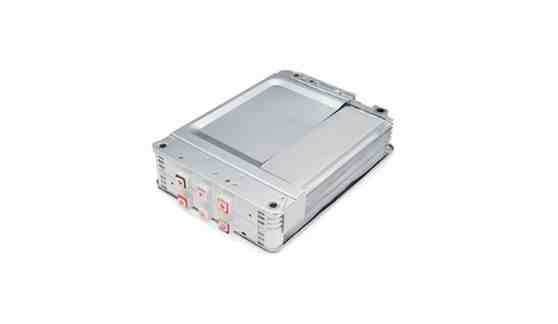
Now that electric vehicles are hitting our roads, more and more people are interested in the technology behind these vehicles. Electric vehicles feature tons of exciting technologies. In today’s electric vehicles, you can find everything from regenerative brakes to advanced fast charging.
But, aside from electric motors, the most important component of an electric vehicle is its battery. The lithium battery in most electric vehicles is also one of the most controversial parts of an electric vehicle. Read on to find out how lithium-ion batteries in electric vehicles are helping propel these advanced machines forward.
Why Are Lithium-Ion Batteries Important?
Lithium-ion batteries are at the heart of the electric vehicle revolution. These batteries offer a high energy density, especially compared to lead acid batteries, which are much heavier if you want to obtain a comparable capacity. Lithium-ion batteries are also ideal for use in electric vehicles as they can be recharged multiple times, which is essential for use in electric vehicles that require extended charge/recharge cycles throughout their lifespan. useful life. Another reason lithium-ion batteries are making headlines is the environmental impact of operating these batteries.
Over the lifetime of an electric vehicle, due to its zero tailpipe emissions, electric vehicles are very clean. But, the initial impact of mining the materials that go into an EV’s lithium-ion battery is costly to the environment. Not only that, but many people are concerned about the conditions many workers in these mines face on a daily basis. For this reason, recycling these materials is a top priority for many automakers actively involved in manufacturing electric vehicles.
What Is a Lithium-Ion Battery?
A lithium-ion battery contains cells that contain a positive cathode and a negative anode. There is also an electrolyte that separates these two layers, and through chemical reactions that release electrons, the battery can supply electrical energy to anything it is connected to. The number of cells determines the capacity of the battery, measured in kWh. In the case of lithium-ion battery, lithium is one of the most important components contained in the battery, and this is because lithium is very willing to give up an electron.
Thanks to the chemical reactions that take place in the anode and the cathode, the lithium-ion battery can be charged and discharged several times. This is because these chemical reactions can be reversed multiple times. Lithium-ion batteries come in many shapes and sizes and are used in applications as diverse as consumer electronics and electric vehicles. Obviously, lithium-ion batteries in an electric vehicle are much larger than those you might find in your smartphone, but they still work on the same principles.
One of the biggest advantages of lithium-ion batteries is their high energy density, which makes them relatively light compared to other battery technologies. Manufacturers must take care when designing and implementing lithium-ion batteries in their devices because if the anode and cathode were to be exposed to each other, these batteries can undergo chemical reactions likely to cause fires or even small explosions.
Even though lithium-ion batteries do an incredible job of powering electric vehicles, they face a challenge in the future solid-state battery. It remains to be seen whether solid-state batteries can be improved enough to see mainstream use in a major automaker’s electric vehicle lineup.
How Does a Lithium-Ion Battery Work?
The basic lithium-ion battery takes advantage of the chemistry of its materials. These batteries contain lithium, a metal eager to lose an electron, forming lithium ions, from which the battery takes its name. These batteries are made up of a positive electrode called the cathode, which has a metal oxide in it (cobalt is a common choice). These batteries also have a negative electrode called the anode, which is usually made of graphite, and the graphite allows lithium to sandwich between them.
Between cathode and anode, a liquid electrolyte facilitates lithium-ion movement from anode to cathode. The battery also features a porous separator, which is essential for maintaining battery safety, as it prevents the anode and cathode from coming into direct contact with each other. If the two battery electrodes were to come into direct contact, the result would be catastrophic. When a lithium-ion battery powers a device, the lithium intercalated in the graphite-containing anode loses an electron.
This process creates lithium ions, as well as a free electron. Lithium ions pass from the anode to the cathode via the electrolyte and the porous separator. As the lithium ions move through the separator, the electrons take a different path that takes them through the electronic device that needs to be powered. Once they pass through the device, the electrons end up at the cathode. When the battery needs to be recharged, the process essentially starts again, but in reverse.
This is why lithium-ion batteries are so perfect for use in electric vehicles, as the process can be repeated multiple times. When you charge your lithium-ion battery, the charger forces electrons out of the cathode, providing a flow of electrons into the anode. This causes the entire chemical process that occurred during battery discharge to be reversed, with the lithium ions leaving the cathode and returning to the anode. After the charging process is complete, the battery is ready for use again.
EV Battery Technology Will Continue to Improve
EV batteries already give electric vehicles amazing range and can be used multiple times. But, there’s still a lot to improve about this technology, especially how EV batteries are recycled once they reach the end of their useful life. It remains to be seen whether lithium-ion technology is kept around long enough to see monumental improvements or replaced completely with promising technology like solid-state batteries.
Automakers will spend more than $515 billion through 2025 to develop new electric passenger vehicles and battery manufacturing infrastructure, he predicts.
How bad are batteries for the environment?
As batteries corrode, their chemicals enter the soil and contaminate ground and surface water. Our ecosystems, which contain thousands of aquatic plants and animals, are compromised when filled with battery chemicals. This means that when we drink tap water, we could ingest dangerous metals.
Are there environmentally friendly batteries? Organic flow batteries are said to be safe, environmentally friendly and inexpensive. As such, the battery presents itself as an alternative to commonly used lithium-ion batteries and vanadium flow batteries.
Are lithium batteries bad for environment?
Lithium-ion batteries contain metals such as cobalt, nickel and manganese, which are toxic and can contaminate water supplies and ecosystems if released from landfills. Additionally, fires at landfills or battery recycling facilities have been attributed to improper disposal of lithium-ion batteries.
Is lithium toxic to the environment?
Lithium batteries are generally not considered an environmental hazard, except when they contain toxic (heavy) metals and are disposed of in large quantities. Literature review indicated that lithium is not expected to bioaccumulate and that its human and environmental toxicity is low.
Are lithium batteries bad for climate change?
A 2019 study shows that 40% of the total climate impact caused by the production of lithium-ion batteries comes from the mining process itself – a process that Hausfather considers problematic. “As with any mining process, there is a disturbance of the landscape,” says Hausfather.
How much will an electric car cost in 2023?
| Electric SUVs | base price | Minimum range |
|---|---|---|
| Kia Niro Electric 2023 | $39,990 | 239 |
| Kia EV6 2022 | $40,900 | 232 |
| Volkswagen ID.4 2022 | $41,230 | 245 |
| Toyota bZ4X 2023 | $42,000 | 222 |
Will the prices of electric cars go up? But even more disappointing is the rate at which EV prices are rising relative to their gas counterparts. According to a recent analysis by car-buying database iSeeCars, prices for electric cars rose 54.3% year-on-year, while gas-powered cars rose just 10%. .1%.
How much is the cheapest electric car going for?
Chevrolet Bolt EV, EUV After dropping $5,900 in price before its summer production start date, the 2023 Chevrolet Bolts EV and EUV are now the most affordable all-electric vehicles you can buy, with a starting price of $26,595.
How long does an electric car battery last?
An EV battery should last 10 to 20 years depending on maintenance and care.
What is the basic price of an electric car?
The cheapest electric vehicles you can buy today are the 2022 Nissan Leaf and the 2022 Mini Cooper Electric Hardtop, both of which start at under $30,000.
What is the price of the cheapest Tesla?
The 2022 Tesla Model 3 has an official starting price of $46,990 for its base rear-wheel-drive (RWD) version. This makes it the cheapest Tesla car currently on offer. The Model 3 is Tesla’s least expensive vehicle.
Will there be electric cars in 2023?
2023 IndiEV Indi One This EV startup is set to release its first car, the Indi One, for the 2023 model year. It’s an SUV with a range of up to 300 miles per charge and standard all-wheel drive . Pricing starts at $45,000 for the base version with reservations now open.
Will all cars eventually become electric?
By 2040, about half of the vehicles on the road will still be powered by fossil fuels, but all new vehicles sold will be electric vehicles.
Will electric cars replace gas cars in the future?
A recent report predicts that at current rates, [electric cars] (https://getjerry.com/tag/electric-vehicles) will outnumber gasoline-powered cars by 2040! It’s not the near future, but for such a recent invention, it’s soon.
What Year Will there only be electric cars?
The company has committed to all new vehicles being pure electric from 2025 with both fuel cell electric vehicles and battery electric vehicles, aiming to be a 100% zero-emission vehicle brand. by 2030 and carbon neutral by 2035.
How Much Will electric vehicles cost in 2030?
Electric car manufacturing to soar Global automakers are expected to spend more than $515 billion by 2030 to develop and build electric vehicles.
How many electric vehicles will there be in 2030?
The number of electric vehicles on U.S. roads is expected to reach 26.4 million in 2030, up from 18.7 million as projected in the 2018 report. The projected 26.4 million electric vehicles will represent nearly 10% of the 259 million vehicles (cars and light trucks) that are expected to be on U.S. roads in 2030.
How much will an electric car cost in 2023?
The larger Bolt EUV 2023 costs $28,195, down from $34,495 when it launched last year. The unusual price drop comes at a time when prices for new and used cars are at record highs, caused as much by supply shortages as inflationary pressures.
Is Ukraine rich in lithium?
According to studies by the Ukrainian geological service, in the ancient rocks of this shield are hidden deposits of lithium with high potential. Discoveries that have been identified mainly around the area of Mariupol, the port city of Donbass torn apart by Russian bombing.
Which country has the most lithium? Where is lithium available from? With 8 million tons, Chile has the largest known lithium reserves in the world. This puts the South American country ahead of Australia (2.7 million tons), Argentina (2 million tons) and China (1 million tons).
Is Ukraine a big producer of lithium?
Ukraine is not a major lithium producer currently, but the country has attracted attention for its own reserves before the invasion. Production in the region has stalled due to the war.
Does Ukraine have lithium oxide?
Ukrainian researchers have speculated that the eastern region of the country contains nearly 500,000 tons of lithium oxide, a source of lithium essential for the production of the batteries that power electric vehicles.
Who is the largest lithium producer in the world?
Despite the pandemic, many companies continue to invest heavily in lithium batteries. While all logic points to the switch to lithium, that’s easier said than done, because even though a world as connected as the one we live in today, politics dominates, and in the case of lithium , China dominates.
Does Ukraine have a lot of lithium?
According to preliminary estimates, researchers believe Ukraine is a lithium treasure trove, holding around 500,000 tonnes of the “non-renewable mineral that makes renewable energy possible”. Lithium has become virtually irreplaceable in electric vehicle (EV) batteries. due to its efficient energy storage by…
What metals is Ukraine rich in?
The country has abundant reserves of coal, iron ore, natural gas, manganese, salt, petroleum, graphite, sulfur, kaolin, titanium, nickel, magnesium, timber and mercury.
What precious metals does Ukraine produce?
Ukraine is also a major producer of manganese, manganese ore and manganese ferroalloys and has 75% of the ore reserves of the former CIS. The aluminum industry is concentrated in Mykolaiv and Zaporizhia but is limited by energy availability and costs.
What is the Ukraine’s most valuable resource?
Practical and symbolic value of coal. Coal is by far the most abundant deposit in Ukrainian regions under Russian control. The roughly 30 billion tons of hard coal deposits there have an estimated commercial value of $11.9 trillion, SecDev estimates.
Does Ukraine have precious metals?
Rare metal ores. Ukraine is a province of rare metals: the recoverable resources of rare metals are the largest in Europe. The most important is the Ukrainian shield with its 22 rare metal formations.
Does the Ukraine have lithium?
According to preliminary estimates, researchers believe Ukraine is a lithium treasure trove, holding around 500,000 tonnes of the “non-renewable mineral that makes renewable energy possible”. Lithium has become virtually irreplaceable in electric vehicle (EV) batteries. due to its efficient energy storage by…
Does Russia have a lot of lithium?
Lithium reserves in Russia amount to one million tons, as shown by data from the US Geological Survey (USGS).
Does Ukraine have rare earth minerals?
Ukraine, in turn, is also among the richest European countries in rare earth metals and lithium reserves, with estimates of the value of these deposits ranging from $3 trillion to $11.5 trillion.
What will replace lithium batteries?
These include better design to ensure longer lasting batteries and a circular economy model to recover used materials.
- Aluminum. Aluminum is a readily available resource and one of the most recyclable materials. …
- Salt. Salt is very similar to lithium in terms of chemical composition. …
- The iron. …
- Silicon. …
- Magnesium. …
- Hemp.
What metal will replace lithium batteries? For a decade, scientists and engineers have been developing sodium batteries, which replace both the lithium and cobalt used in current lithium-ion batteries with cheaper and more environmentally friendly sodium.
What technology will replace lithium?
Solid-state batteries could replace lithium-ion In addition to sodium-ion, solid-state battery technology could replace lithium-ion cells. Startups developing solid-state batteries are calling lithium-ion a legacy technology, reaching the limits of energy-density advances as demand for higher performance grows.
What will Tesla use instead of lithium?
nickel-cobalt-aluminum (NCA) nickel-cobalt-manganese (NCM) lithium iron phosphate (LFP)
What will replace lithium in the future?
Magnesium. Magnesium is currently being researched as a potentially powerful component in future batteries. It is an element that can carry a significant charge of 2, which is more than lithium and sodium.
What is the next generation of battery technology?
A new study by researchers at Stanford University paves the way for building better and safer lithium-metal batteries. Close cousins to the rechargeable lithium-ion cells widely used in portable electronic devices and electric cars, lithium-metal batteries hold tremendous promise as next-generation energy storage devices.
Which battery technology is best?
Lithium Ion (Liâion) – fastest growing battery system. Liâion is used where high energy density and light weight are of paramount importance. The technology is fragile and a protection circuit is required to ensure safety. Applications include laptops and cell phones.
What battery technology will replace lithium-ion?
Dual Carbon Perhaps the forerunner in the race to replace lithium-ion, this technology uses carbon in both the anode and cathode of the battery, providing an energy density comparable to lithium-ion but on a longer potential functional life with improved safety and much cheaper raw materials.
What is the next battery technology?
NEXT GENERATION LITHIUM-ION BATTERIES In this technology, the positive electrode acts as the initial source of lithium and the negative electrode as the host for the lithium.
Is there a replacement for lithium batteries?
Researchers have identified an alternative to lithium battery technology by developing glassy sodium electrodes capable of supporting long-duration grid-scale energy storage.
What will replace lithium in the future?
Zinc-manganese oxide batteries This makes the zinc-manganese oxide battery a possible alternative to lithium-ion and lead-acid batteries, especially for large-scale energy storage to support the national power grid.
Is there anything better than lithium batteries?
Fluoride batteries have the potential to last eight times longer than lithium batteries, but that’s easier said than done. That’s because fluoride is an anion, or a negatively charged ion, which is the magic behind its high energy density, but that’s also why it’s reactive and hard to stabilize.

Comments are closed.